
Sierra Technology
AGSTU Sierra™ is a Hardware RTOS Accelerator that moves scheduling, timing and synchronization from software into FPGA hardware, delivering deterministic real-time performance with reduced CPU overhead
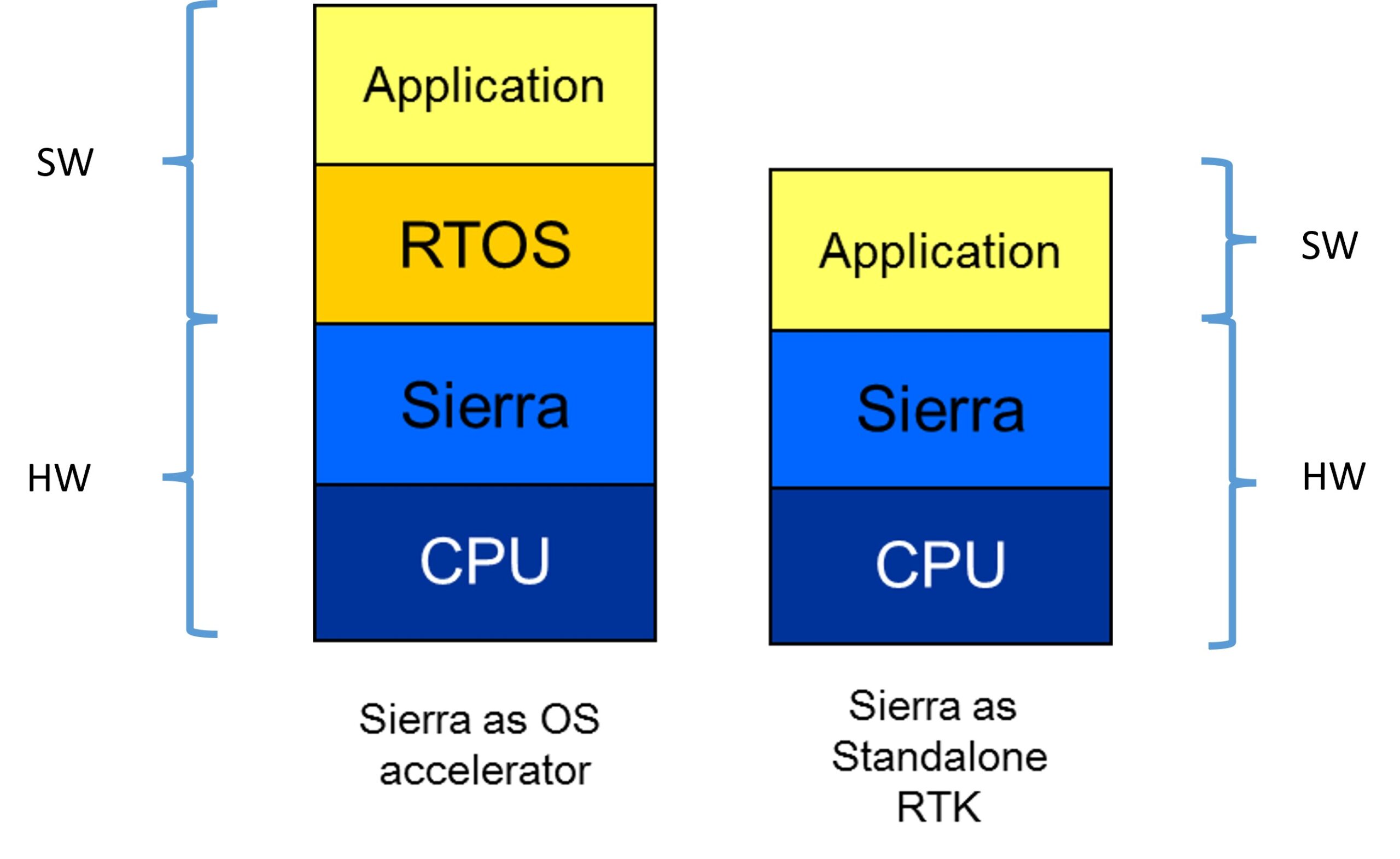
Sierra can be used in two different ways:
RTOS Accelerator
Sierra works alongside an existing RTOS, offloading scheduling, timing, synchronization, and other kernel services into FPGA hardware. This improves performance while maintaining compatibility with existing software.
Standalone Hardware RTK
Sierra provides the core real-time kernel functions directly in hardware, eliminating the need for a traditional software RTOS. This reduces software complexity, memory usage, and CPU overhead.
In both cases, Sierra delivers faster response times, deterministic behavior, and improved system efficiency.
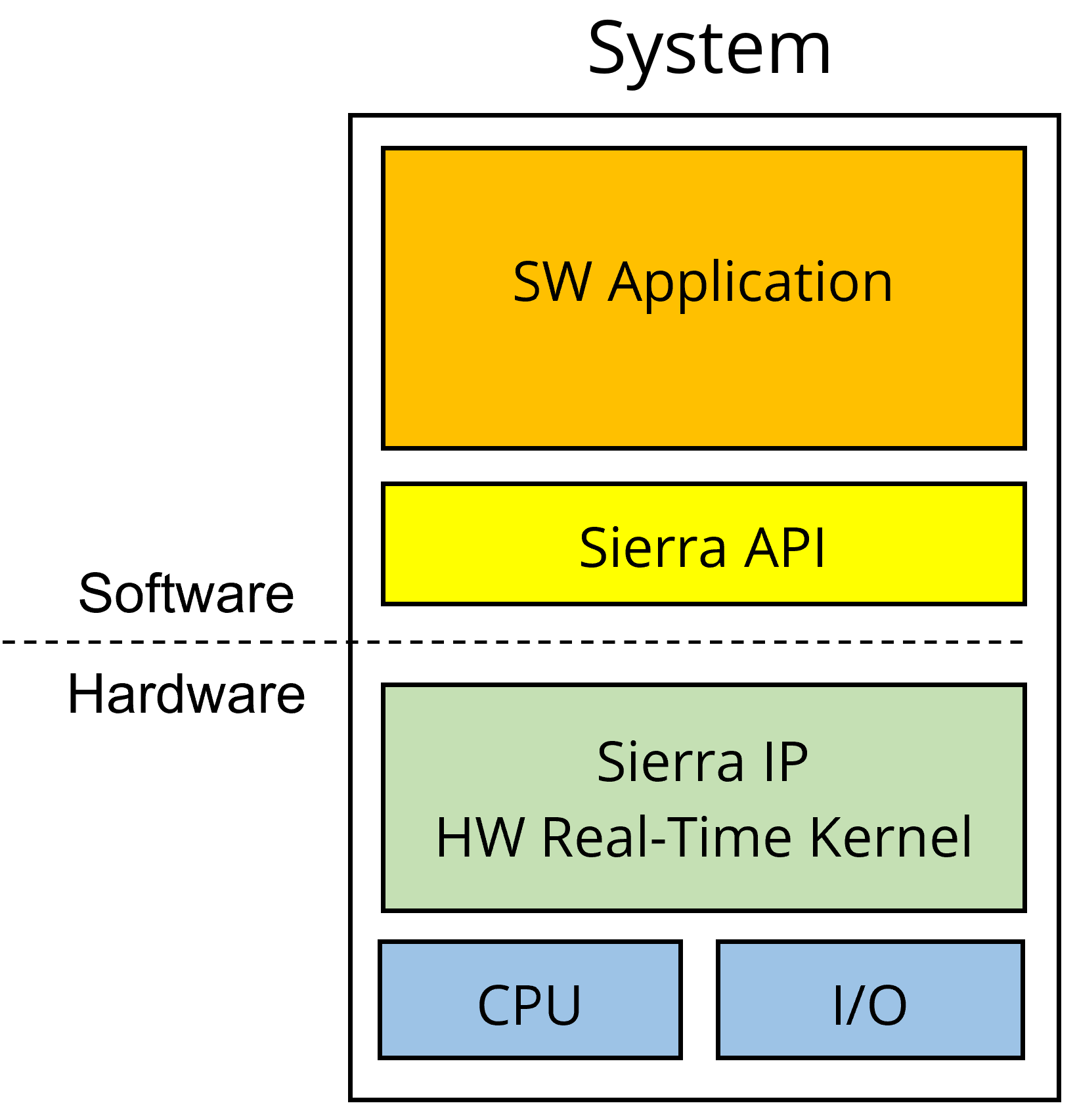
The application runs on the CPU and accesses Sierra through a lightweight software API.
Sierra implements real-time kernel services directly in hardware, including scheduling, timing, synchronization, and interrupt management.
Result: Less CPU overhead, more deterministic behavior, and faster real-time response.
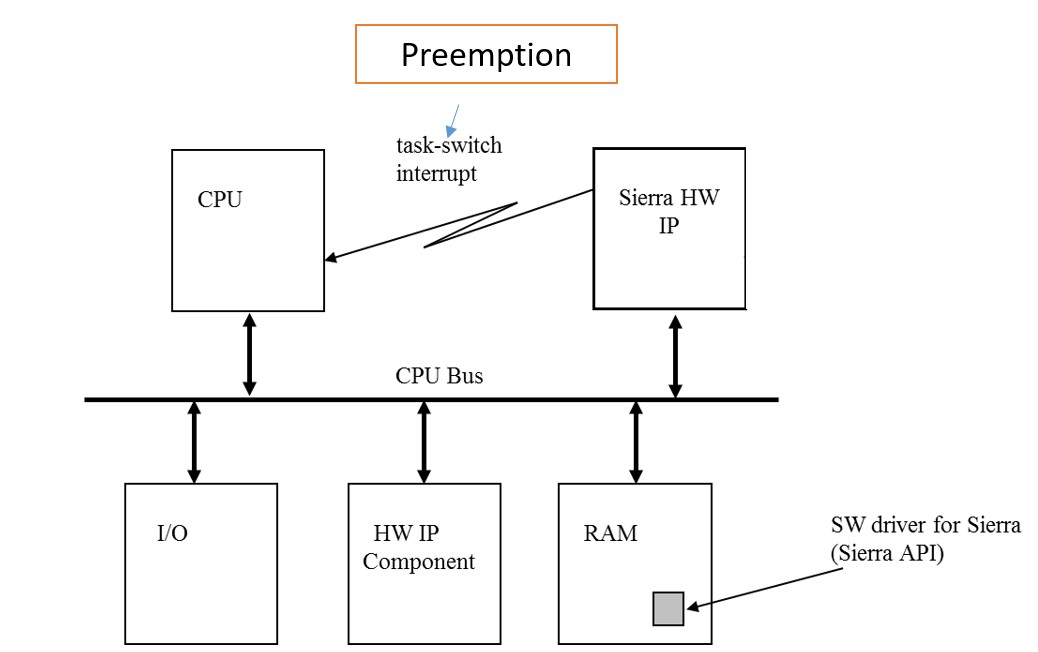
This figure shows how Sierra performs hardware-based task scheduling.
Sierra continuously monitors the state of all tasks. When a higher-priority task becomes ready to run, Sierra generates a task-switch interrupt to the CPU.
The CPU then saves the current task context and switches to the new task selected by Sierra.
Unlike traditional RTOS solutions, Sierra performs scheduling, timing control, and task management directly in hardware. This eliminates the need for software-based clock-tick processing, reducing operating system overhead and minimizing timing jitter.
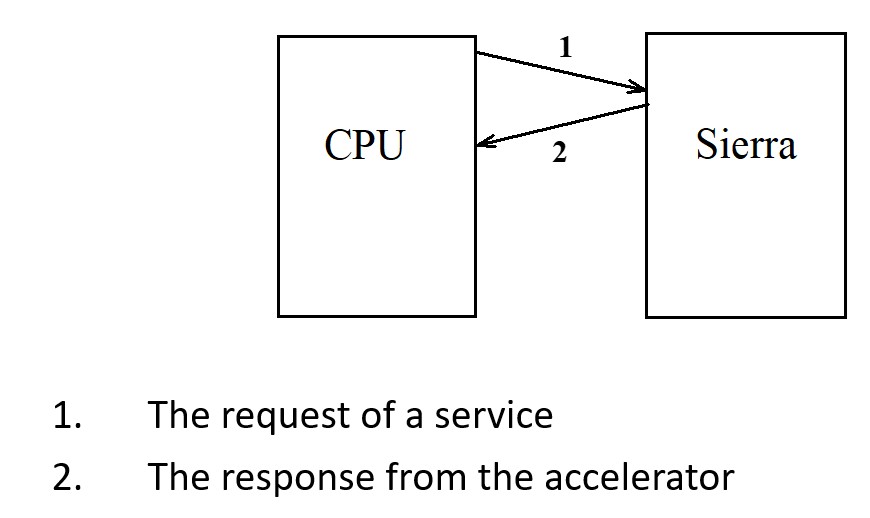
This figure shows how the CPU communicates with Sierra.
1. Service Request
The application calls a Sierra function, such as creating a task, waiting for a semaphore, or starting a timer. The CPU sends the request and its parameters to Sierra.
2. Service Response
Sierra executes the requested function directly in hardware and returns a response to the CPU. The response may contain status information, return values, or confirmation that the operation has completed.
Because the service is executed in hardware, most operations complete within only a few clock cycles, providing fast and deterministic real-time behavior.
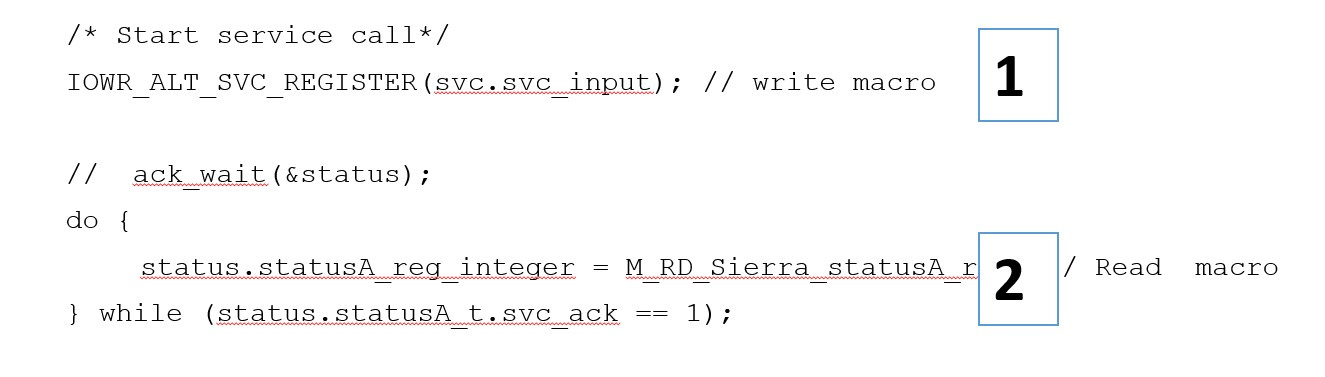
Service Call Example in the figure
- The CPU sends a service request to Sierra, such as creating a task or starting a timer.
- Sierra executes the function in hardware and returns a response when the operation is complete.
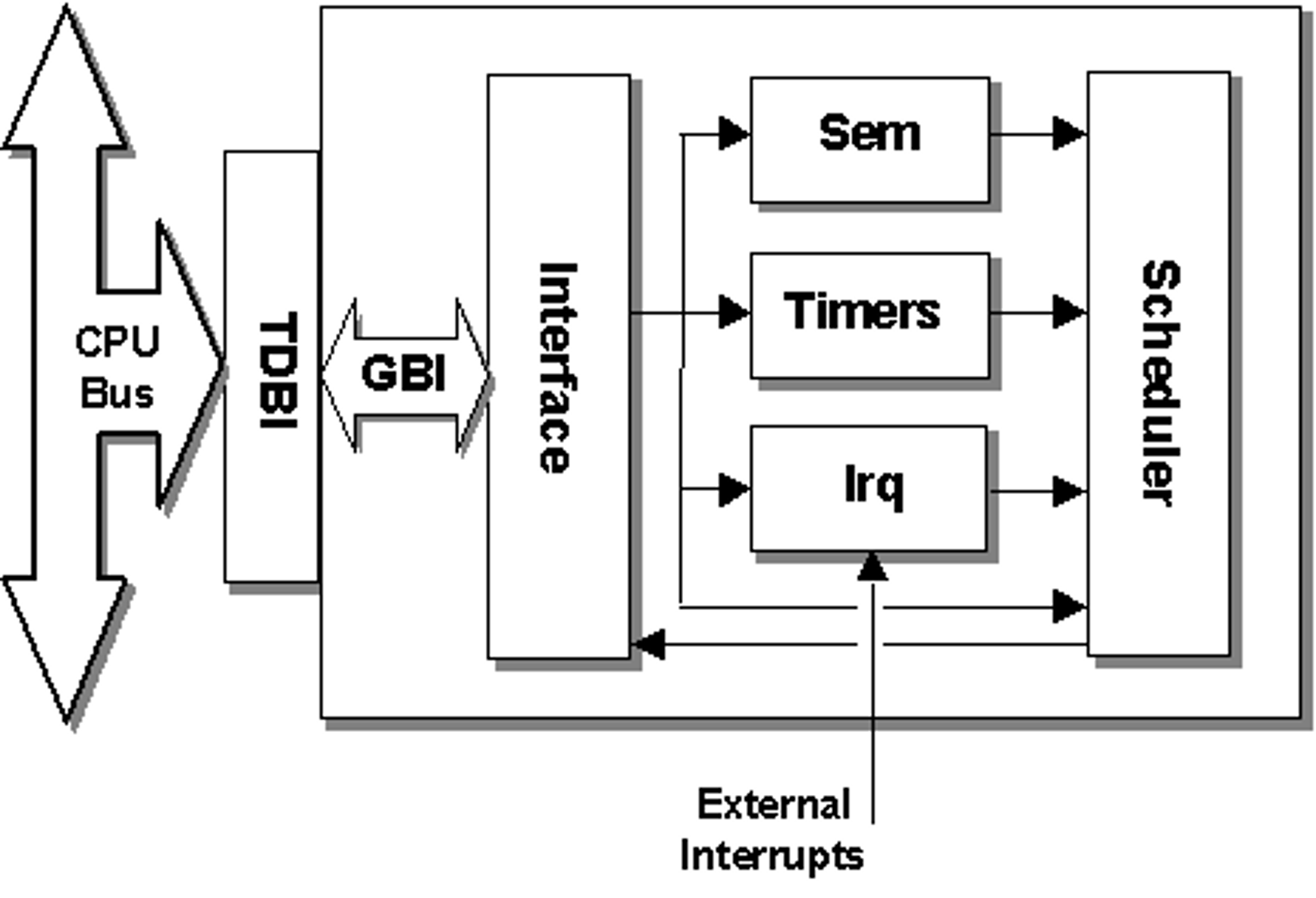
Simple Hardware Integration
Sierra is connected to the CPU through a simple register-based interface and a single interrupt signal.
The CPU communicates with Sierra by reading and writing registers, while Sierra generates an IRQ whenever a task switch requires.
Internally, Sierra contains dedicated hardware blocks for scheduling, timers, semaphores, and interrupt management, all operating in parallel hardware.
Key benefit: Simple integration
Sierra provides a comprehensive set of hardware-accelerated real-time services through a lightweight software API.
Task Management
- Create and delete tasks
- Start, block, and yield tasks
- Change task priorities
- Retrieve task information
- Enable or disable task switching
External Task Interrupt Management
- External hardware events can directly activate tasks through dedicated Sierra interrupt inputs.
- Activated tasks are automatically placed in the scheduler and executed according to their priority.
- Enables fast, deterministic event handling with no CPU overhead.
Time Management
- Configure system time base
- Delay and resume tasks
- Create periodic tasks
- Wait for the next execution period
- Restart periodic timers
- Hardware-based deadline control for periodic tasks
Synchronization and Resource Management
- Take and release semaphores
- Monitor resource status
- Wait for, set, and clear event flags
All services are executed by Sierra hardware, providing deterministic behavior with minimal CPU overhead.
Why Sierra?
- Deterministic real-time performance
- Hardware-accelerated RTOS services
- No software scheduling overhead
- No software clock-tick processing
- Deadline monitoring and overload control
- Fast interrupt-to-task response
- Lightweight API and low memory footprint
- Scalable and technology-independent architecture
- Long product lifetime with consistent behavior across FPGA generations
-
Advanced RTK functions can be added in Sierra hardware without impacting CPU performance